Tanglewood Isn't One Neighborhood. It's Twenty-Three Sections With Different Rules.
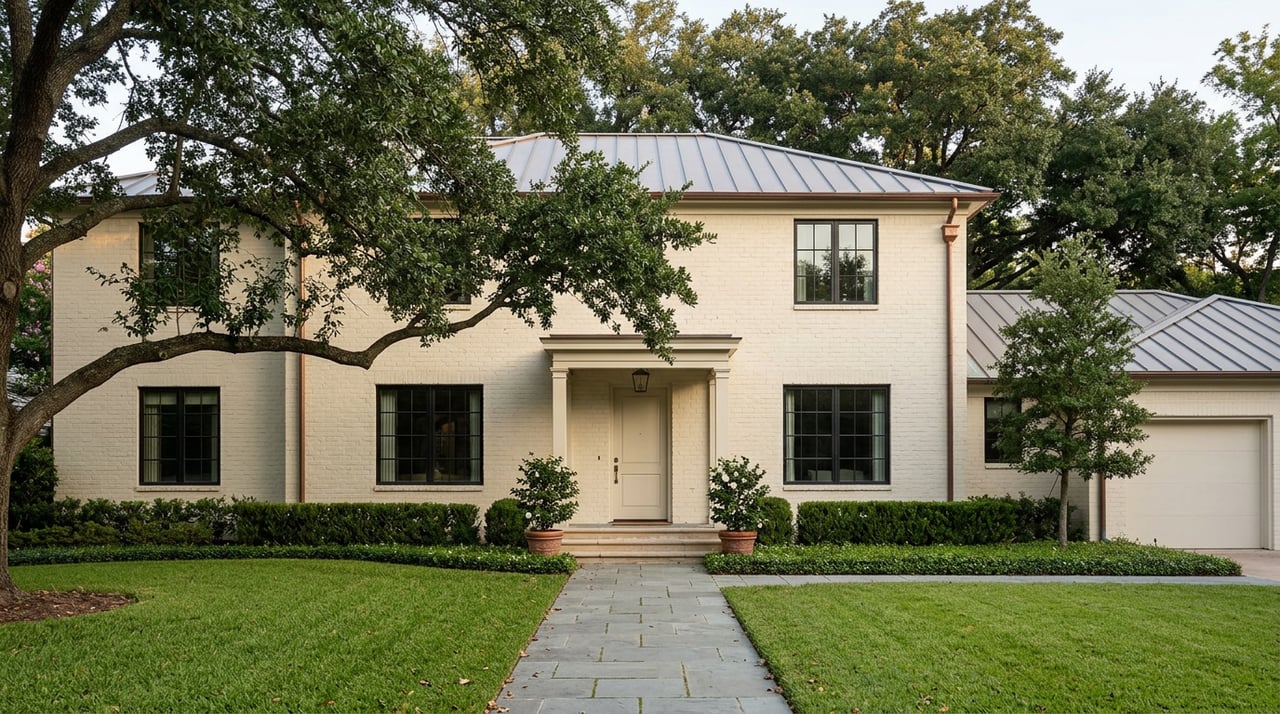
Tour two houses on neighboring blocks in Tanglewood and they can look like the same product. Similar lot depth, same live oak canopy, same ranch-to-custom-rebuild story that defines most of the neighborhood's housing stock. What you can't see from the sidewalk is which of Tanglewood's 23 separately recorded deed restriction sections governs each one, and that detail decides whether your renovation plan is a formality or a fight.
Houston has no citywide zoning. The city's planning department is direct about what fills that gap: deed restrictions, not zoning, are what keep a subdivision residential and out of commercial hands, and most restrictions run in 25 to 30 year terms with automatic renewal clauses unless owners take action to stop them. In a neighborhood without zoning, the deed restriction is the rulebook. Tanglewood has 23 of them, drafted separately for Sections 1 through 19 plus 4A, 11A, 11B, and 17A, going back to around 1949. The Tanglewood Homes Association, which has enforced them since it was chartered in 1948, describes the language across sections as largely identical with what it calls "minor differences" from one section to the next. Those differences cover setback lines, roofline and material rules, garage door orientation, fence height, and where a driveway can enter the street. On paper, minor. In practice, they are the reason a buyer's expansion or rebuild potential can change at a section line that no listing photo will show you.
This is the part that catches people mid-transaction. A deed restriction covenant and a City of Houston building permit are not the same review, and passing one does not exempt you from the other. The Architectural Control Committee that enforces Tanglewood's covenants is a private body answering to THA, separate from anything the city inspects. The city, meanwhile, is reviewing for building safety, floodplain compliance, and drainage, with no opinion on whether your roofline matches your neighbor's.
| Review Track | Who Runs It | What It Controls | Typical Timeline |
|---|---|---|---|
| Architectural Control Committee | Tanglewood Homes Association | Setbacks, materials, roofline, fence height, driveway location, per-section covenant terms | About 2 to 8 weeks once your submission is complete |
| City permitting | City of Houston | Structural safety, floodplain status, drainage, life safety code | Several weeks to months, depending on scope and floodplain review |
Buyers who assume one approval covers the other tend to lose the timeline they budgeted for a renovation. Sellers who assume their covenant matches the house across the street sometimes learn otherwise when a buyer's architect pulls the actual recorded restriction for that specific section rather than relying on a general summary. THA itself amended the restrictions twice in recent memory, once in December 2002 with more than 75 percent of residents voting to approve updates aimed at the growing wave of new construction, and again in 2018 to keep pace with changing building patterns and the Texas Property Code. The rules are not static. They were written to be revisited, and they have been.
Once you know the sections exist, the pricing data in Tanglewood starts to make more sense, and also less sense as a single number. HAR's 2025 neighborhood facts put the median market value across Tanglewood's 1,181 single-family properties at $2,437,657, with a median lot size of 16,500 square feet and a median year built of 1990. Homes.com, tracking sales over the trailing twelve months into 2026, reports a median sale price of $2,780,000, up 12 percent from the prior twelve months. Neither number is wrong. They are measuring overlapping but not identical pools of transactions, in a neighborhood where the underlying product ranges from an original 1950s ranch house that has never been touched to a 2026-built estate on a reshaped lot.
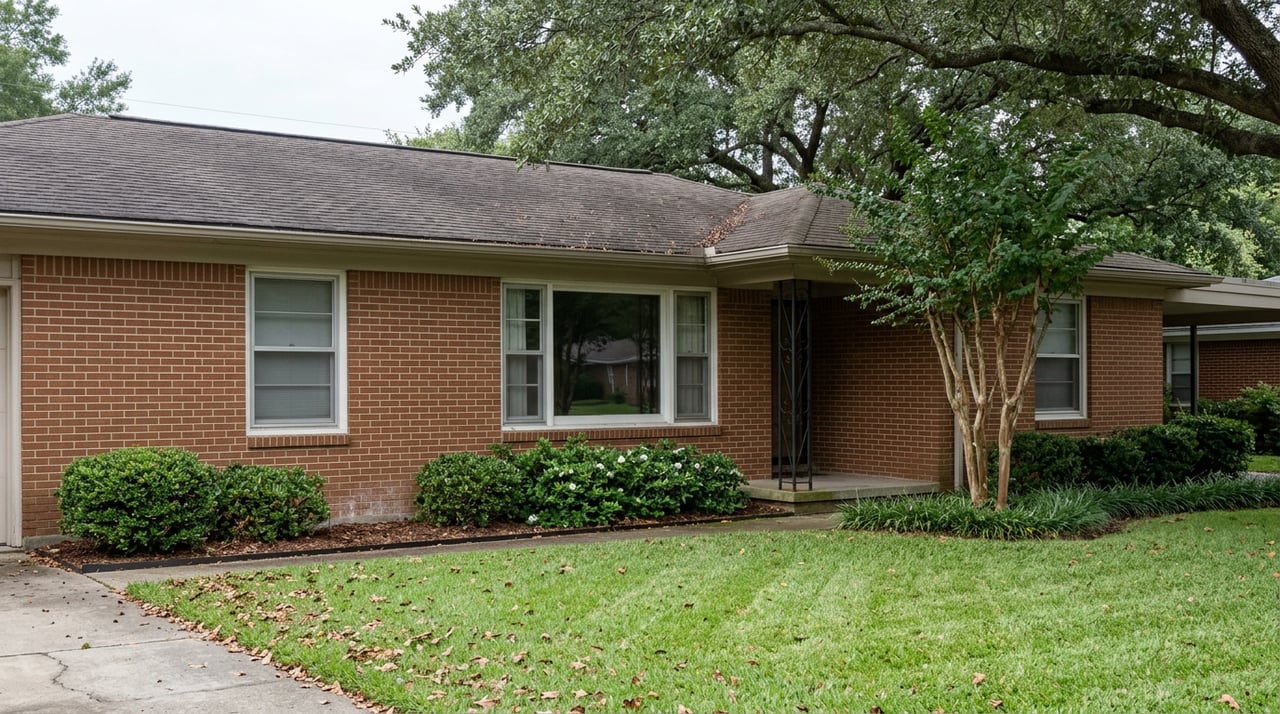
Price per square foot tells the same story from a different angle. HAR's sold data puts the neighborhood median at $481 per square foot. A spring 2026 snapshot from Realtor.com put the median list price per square foot closer to $552. That gap is not noise. It reflects the fact that Tanglewood's housing stock spans original ranch homes from the 1950s and 1960s alongside custom new construction, and a median blending both tells you less than the range does.
Active listings this year make the range concrete. Recent new-construction homes on lots between 14,000 and 21,600 square feet have listed anywhere from about $650 to $950 per square foot depending on finish level and design. A raw lot near 37,000 square feet, with no structure at all, has come to market priced at $4 million purely for the land. None of that spread shows up in a single median. It shows up when you know to ask which section a given address sits in, what that section's covenant permits, and whether the home in front of you was built to that covenant's current standard or grandfathered under an older one.
If you are comparing Tanglewood to another close-in Houston neighborhood on your list, or you already have a specific lot in mind, the sequence that actually protects you looks like this:
None of this is unique to Tanglewood in spirit. Every deed-restricted Houston neighborhood without zoning runs on some version of this two-track system. What makes Tanglewood specific is the number of separate covenants layered under one recognizable name. Twenty-three sections is a lot of individual rulebooks to assume are identical just because the streets curve the same way and the oaks look the same height.
If you are on the other side of this, preparing to list, the section detail works in your favor when you use it. A buyer's agent who understands that your home's covenant already permits the addition they are picturing, or that your lot's setback lines give more flexibility than the house next door, is pricing with more confidence than one working off a citywide median. That is a positioning advantage worth documenting before your home goes live, not after an offer comes in with a contingency built around an assumption that turns out to be wrong.
Does every Tanglewood section have meaningfully different rules? The language across sections is largely the same, but THA itself notes there are differences in specifics like setbacks and driveway placement. The only way to know what applies to a given lot is to pull that section's recorded restriction.
If my renovation is small, do I still need both ACC and city approval? Generally yes. The two reviews serve different purposes, private covenant enforcement versus public safety and floodplain compliance, and one does not substitute for the other regardless of project size.
Where do I find my section's specific deed restrictions? THA maintains section-by-section restrictions and has amended them formally in 2002 and 2018. Your title company or a real estate attorney can also pull the recorded restriction from Harris County records for your exact address.
If you are weighing a purchase or a renovation in Tanglewood and want the section-specific detail before you make an offer or draw up plans, Caroline Bean can walk through what a given lot's covenant actually allows. Let's Connect.
Stay up to date on the latest real estate trends.

A consistent top producer, clients appreciate Caroline's hard work, responsiveness, and total dedication to their needs. She's known for her elite sales skills, impeccable client service and an ability to expertly drive any type of deal, including first-time buyers, new construction sales, resales, or relocations.