The Trolley, the Valet, and Why Highland Village Feels Like a Private Amenity
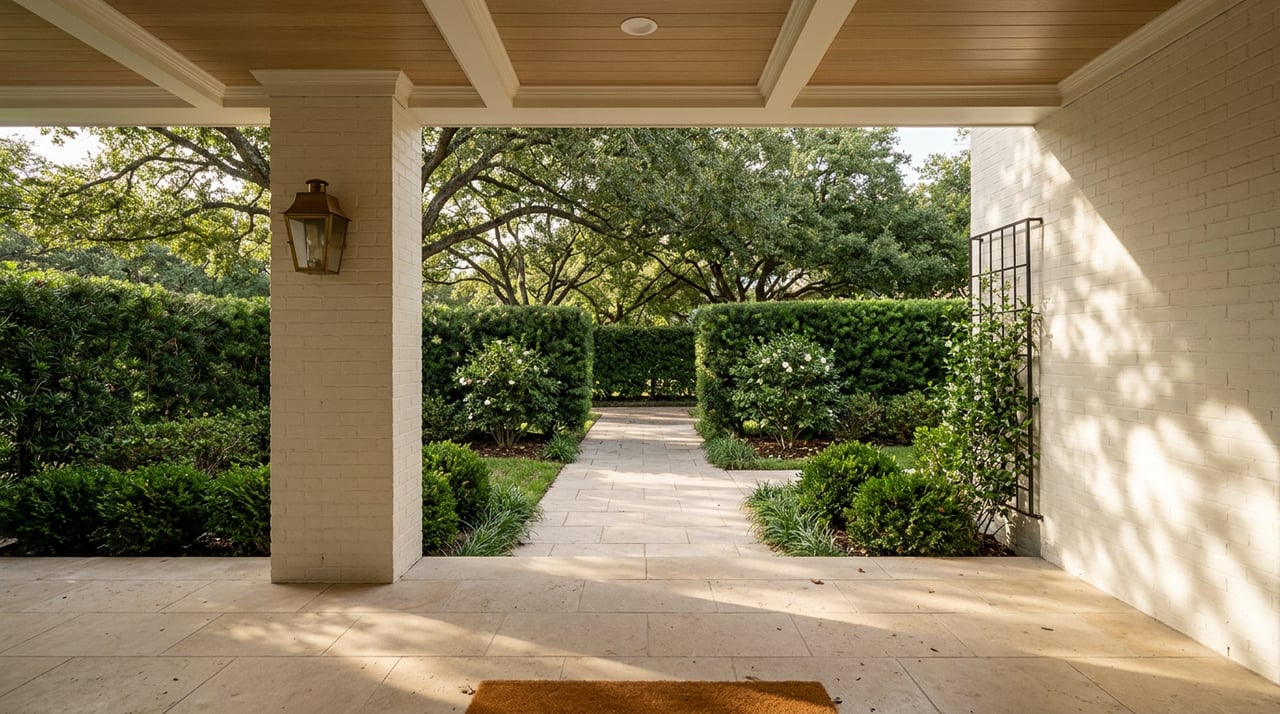
Most Houston shopping centers ask you to park, walk, buy, and leave. Highland Village does not really work that way for the people who live around it. If your address falls inside the small triangle bounded by Westheimer, Wesleyan, and the 610 Loop, the center behaves less like a retail destination and more like an extension of the neighborhood itself. The palm-lined boulevard, the on-site trolley, the front-door parking, the complimentary valet — those details are marketed to shoppers driving in from farther away, but they change something more interesting for residents. They collapse the friction between home and errand, between errand and dinner, between dinner and a walk back to the car. That is the argument of this post: Highland Village is not a place Lynn Park residents visit. It is a place they use.
The official Highland Village site describes the property as a "prestigious main street shopping experience," and the phrasing is more literal than promotional. The storefronts face a broad boulevard rather than a parking field. The trolley loops the property. Valet is complimentary. In a city where the default retail template is a strip center with a shared lot, that layout is unusual, and it is the reason the practical rhythm of a resident's week bends around it.
You see it in small ways. A Lynn Park homeowner who needs one thing from Restoration Hardware does not budget forty minutes for the trip. A neighbor grabbing dinner reservations does not think of the drive as a drive. According to the center's own materials, storefronts include Apple, Crate & Barrel, and Restoration Hardware, along with a rotating cast of boutiques and restaurants along the same walkable stretch. That density is what makes the center function as a resident amenity rather than a weekend outing.
Ask ten Lynn Park residents what they actually do at Highland Village on a given Tuesday and roughly half of the answers involve groceries. The H-E-B-owned Central Market sits within the same cluster of nearby retail, and Rice Epicurean is close by as well. This is where the "extension of home" idea earns its keep. A Central Market run is not the same errand as a trip to a big-box grocer thirty minutes away. It is closer in feel to walking to a corner store in a European city, if the corner store carried oysters and imported olive oil.
Consider what this means in practice:
None of these are luxury behaviors. They are the ordinary rhythms of a household that happens to live inside a three-minute drive of the corridor. What is unusual is how few Houston neighborhoods offer them at this scale.
Lynn Park sits, per its own boundaries, between Richmond and Westheimer, with Wesleyan on the west and the Union Pacific tracks on the east. Highland Village, the neighborhood, sits inside the 610 Loop in the triangle formed by Greenway Plaza, Uptown, and River Oaks. That geometry is not an accident of retail placement. It is the reason a resident can be at Highland Village Shopping Center faster than a Memorial homeowner can back out of a driveway.
The practical consequence is a shortened decision loop. You do not plan a trip. You go. And because the center runs a trolley across its own footprint and offers valet at the restaurants, the second half of the trip — parking, walking between shops, moving from a store to a dinner reservation — is engineered out. The result is that residents make more small trips rather than fewer large ones. That pattern shows up in how the neighborhood lives.
The single most useful thing to know about Highland Village as a resident is that the shopping-to-dinner handoff is frictionless. Boutiques close, restaurants open, and the same valet stand covers both. For anyone who has spent a Saturday evening in a Houston lifestyle center where the restaurants sit in a separate building across a service road, the difference is not subtle.
Two rhythms tend to emerge:
Neither of these rhythms is achievable in most Houston neighborhoods. They are achievable here because the center was designed as a walkable spine and because Lynn Park sits directly against it.
If Highland Village is the front door, the block behind it is a well-stocked pantry. Upper Kirby's restaurant density is a short drive south. The Galleria, less than two miles away by the neighborhood's own reckoning, absorbs the trips that need scale — a specific store, a specific brand, an out-of-town guest who wants to shop for three hours. Memorial Park sits within a short drive for anyone who wants a longer walk than the boulevard offers.
The point is not that these places are close. Every Houston neighborhood claims proximity to something. The point is that they sit in a layered ring around Lynn Park, so residents rarely have to leave the ring to complete a day. Highland Village handles the first tier. Upper Kirby handles the second. The Galleria handles the outliers. Memorial Park handles the outdoor hours. Very little of a typical week requires driving past Loop 610.
Living next to a retail corridor is not without its trade-offs, and residents who have been in the neighborhood a while will recognize the pattern. Weekend afternoons at the center draw traffic from across the city. Holiday shopping weeks compress the parking, though the valet absorbs most of the pressure. And the occasional external incident reaches the parking lot — a police chase in January 2026 ended at Highland Village after a stolen vehicle was pursued off West Loop 610 and struck parked cars in the lot, a reminder that a center this close to a major freeway inherits some of the freeway's turbulence.
These are not deterrents. They are the small facts a resident learns after the first year. The trade for them is a boulevard you can walk on a Tuesday evening in October, when the palms are lit and the restaurant patios are full and the drive home takes four minutes.
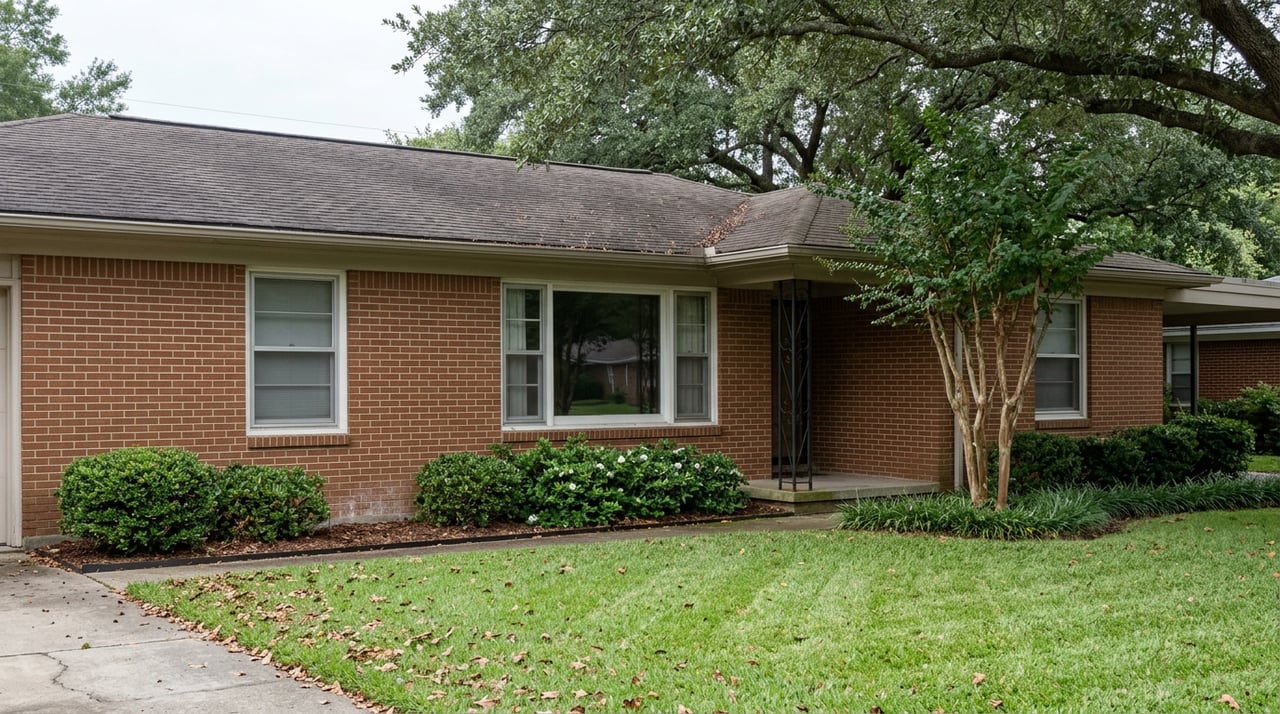
A shopping center does not usually define a neighborhood. In Lynn Park and Highland Village, it partly does. Not because residents identify with retail, but because the center's design — the trolley, the valet, the walkable spine, the grocery anchor — pulls daily errands out of the car and back onto the sidewalk. That is a rare arrangement in Houston, and it is the reason the neighborhood feels denser and more urbane than its ranch-and-transitional housing stock might suggest at first glance. The homes sit on quiet, deed-restricted streets. The life around them runs on a boulevard.
For anyone already living here, none of this is news in the abstract. What is worth naming out loud is how much of the weekly rhythm depends on that specific piece of infrastructure sitting a few blocks away. Take the trolley out, close the valet stand, and the neighborhood still works. But it works less easily. The infrastructure is why the "quick trip" stays quick.
If you live in Lynn Park or Highland Village and are thinking about how your home fits into what comes next — a move up the street, a relocation, or a quiet sale to a buyer who already knows the boulevard — I would welcome the conversation. Reach out to Caroline Bean to talk through the market and what your address is worth to the buyers who value this particular corner of Houston. Let's Connect.
Stay up to date on the latest real estate trends.

A consistent top producer, clients appreciate Caroline's hard work, responsiveness, and total dedication to their needs. She's known for her elite sales skills, impeccable client service and an ability to expertly drive any type of deal, including first-time buyers, new construction sales, resales, or relocations.